

Bronze, Veg-Tanned Leather, Technical Textiles: The Care Guide to Make Your Favorite Pieces Last
Updated October 27, 2025 – A quality garment or accessory is an investment. To ensure it lasts, it's essential to understand the materials it's made from and give them the care they deserve. This fall, three types of materials stand out for their character and technical features: the living bronze of watch cases, the noble quality of vegetable-tanned leather, and the high-performance textiles of our outerwear. Here is our practical guide to maintaining these materials and preserving their beauty over time.
Bronze: Embracing and Mastering the Patina of Time
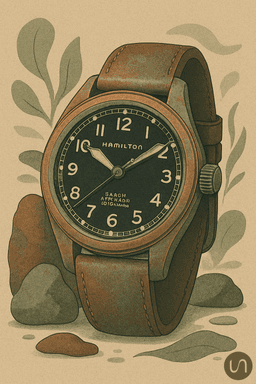
A prominent material in watchmaking, as seen on the new Hamilton Khaki Aviation Pilot Pioneer, bronze is a fascinating alloy (primarily copper and tin). Its unique characteristic? It "lives" and changes appearance through contact with air, humidity, and the skin's acidity. It develops a patina, a layer of oxidation that gives it a unique color, ranging from reddish-brown to grey-green. This patina protects the metal and makes every watch absolutely unique.
Daily Maintenance: After wearing your watch, you can simply wipe it with a soft, dry cloth to remove traces of sweat or moisture. This is the basic step for natural and even aging.
Should you clean it? It's a matter of taste!
To preserve the patina: Do nothing special. Let time do its work. This is what most bronze watch enthusiasts are looking for.
To slow or clean the patina: If you want to restore some of your watch's original shine, a gentle method is to use a bit of lemon juice diluted with water and baking soda to form a paste. Apply it gently with a soft cloth to the case (making sure to protect the strap and crystal), let it sit for a few moments, then rinse with clean water and dry it immediately and thoroughly.
What to avoid at all costs: Never use abrasive products or hard brushes that could permanently scratch the metal.
Vegetable-Tanned Leather: The Nobility of Authentic Aging
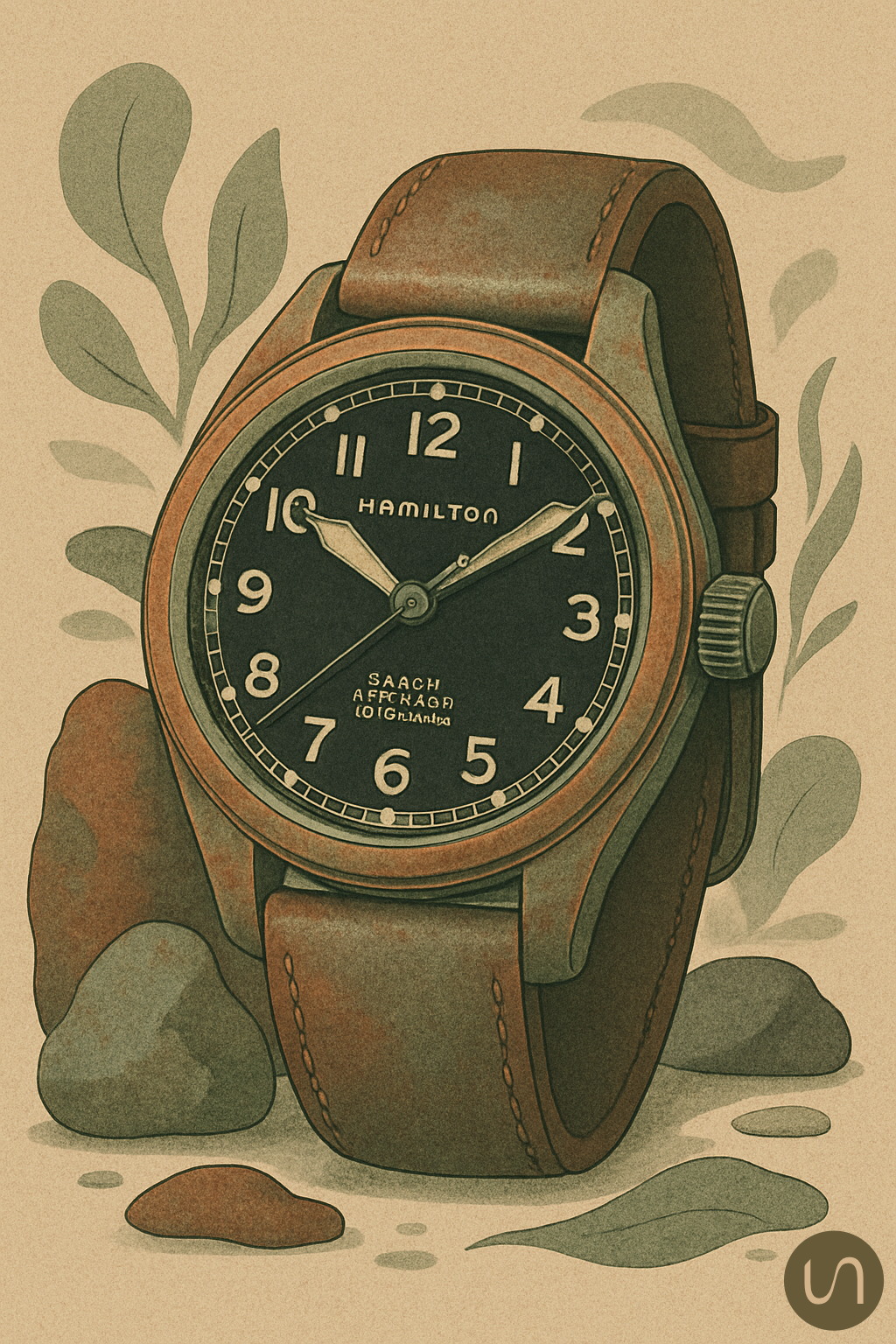
The Hamilton watch strap is made of vegetable-tanned leather. Unlike chrome tanning (used for over 85% of the world's leather), this ancestral process uses natural tannins from plants (bark, leaves, etc.). It's a longer, more environmentally friendly process that gives the leather unique properties.
Its Characteristics: Vegetable-tanned leather is often firmer at first. It will soften, darken, and develop a beautiful patina over time. It is also more sensitive to water and stains than chrome-tanned leather.
Preventive Care: Before the first use, you can apply a thin layer of a colorless, nourishing, and waterproofing cream specially designed for leather. This will protect it from external elements. Routine Cleaning: To remove dust, a simple soft cloth is sufficient. For a small stain, use a special glycerin soap for leather with a barely damp cloth, rubbing very gently in circular motions. Let it air dry, away from any heat source. Nourishment: About every 6 months, or when the leather feels dry, nourish it with a specific balm or cream. Apply a small amount, massage it in, let it rest, and then buff with a clean cloth to remove any excess.
Technical Textiles: Preserving Your Garments' Performance
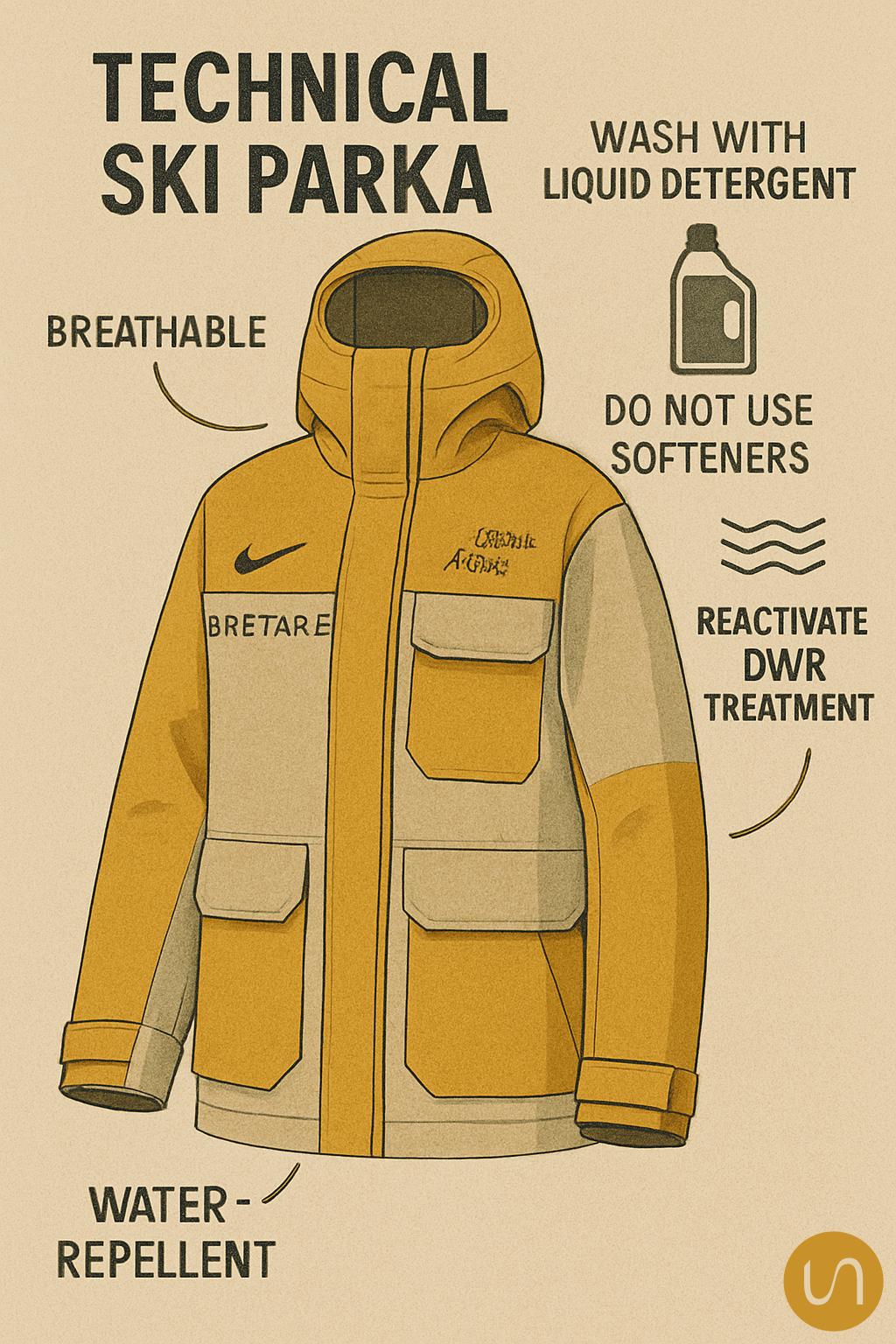
The water-repellent ski parka from the Nike x Martine Rose collection is designed to be both breathable and protective. To maintain these technical properties, specific care is required.
Washing:
Close all zippers and Velcro fasteners before putting the garment in the washing machine to prevent them from damaging the fabric.
Use a gentle liquid detergent, preferably one specifically for technical apparel. Absolutely avoid powder detergents (which can clog the membrane's pores) and fabric softeners (which destroy the water-repellent treatment).
Choose a synthetic cycle at 30°C (86°F) with a gentle spin.
Drying:
Tumble drying on low heat is often recommended for this type of garment. The moderate heat helps reactivate the DWR (Durable Water Repellent) treatment. If you don't have a dryer, hang your jacket on a hanger to air dry, then go over it with a very low-temperature iron, placing a towel between the iron and the garment to reactivate the water repellency.
Re-Waterproofing:
When you notice that water droplets no longer bead up on the fabric but instead soak in, it's time to renew the water-repellent treatment using a specific waterproofing spray, available at sporting goods stores.
CONCLUSION
Taking care of your belongings isn't a chore; it's a way to respect the work of artisans and designers and to extend the life of your investments. Whether it's the patina of a bronze watch, the luster of beautiful leather, or the technical prowess of a parka, every material has its own language. Learning to understand it ensures you'll have a lasting style full of character.
KEY TAKEAWAYS: • Bronze: Let the patina develop for a unique look, or clean it occasionally with gentle products (lemon, baking soda) to revive its shine. • Vegetable-Tanned Leather: Protect it from water and nourish it regularly with a suitable cream to help it soften and develop a beautiful patina. • Technical Textiles: Wash at 30°C (86°F) with liquid detergent, no fabric softener, and reactivate the water repellency with gentle heat (tumble dryer or low iron).
FAQ
Can my bronze watch leave green marks on my skin?
What's the difference between vegetable-tanned leather and "vegan" leather?
Can I use my shoe waterproofer on my technical jacket?
📎 Sources: [S1] Description of Hamilton watches with bronze cases and vegetable-tanned leather straps - Challenges.fr [S2] Details on the water-repellent ski parka from the Nike x Martine Rose collection - Hypebeast.com




 Français